When I started gardening here, I realized that our dry summers lack all the delicious greens that we are so used to eat in winter and spring (we’re in zone 9B with wet winters and dry summers).
So I started researching about different leafy plants that are heat and drought tolerant.
Here are some of the plants I’ve been growing and eating ever since.
PUMPKIN,SQUASH, GOURD LEAVES
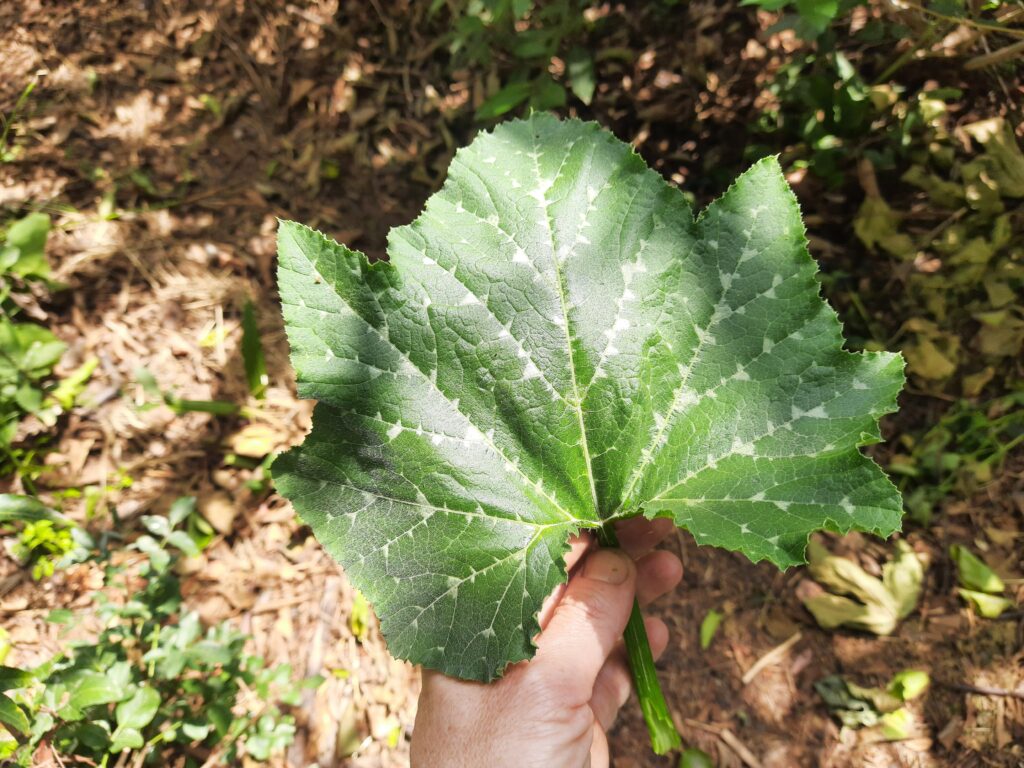
Pumpkin leaves are huge and take up so much space in the garden. When I found out that in Africa,Asia and many other countries it was eaten as a regular leafy green, I was jumping up and down!
The only trick is to get rid of the strings before cooking it. You can do it by holding the leaf by its stem upside down and pulling a little piece by the stem all the way down the leaf.Here’s a great and short video showing how to do it. Then you chop it and stir fry it. It tastes really good!
Sicilians grow cucuzza sometimes only for its leaves. They’re great with pasta, mixed vegetables, rice,soups, you name it!
pumpkin leaf is delicious!
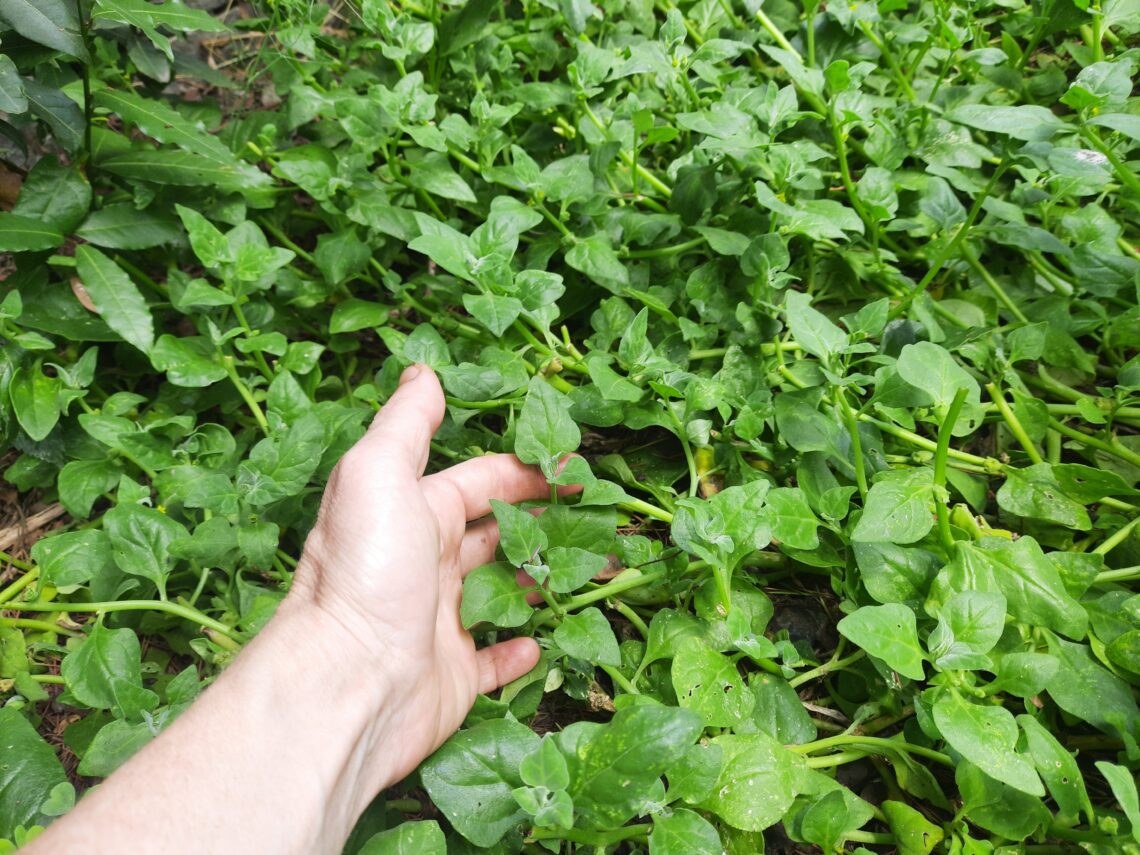
NEW ZEALAND SPINACH/Warrigal Greens (Tetragonia tetragonioides)
It’s a heat tolerant plant that has a spreading habit and it can overwinter in a sheltered spot. The seeds are slow to germinate but they do once the weather warms up.
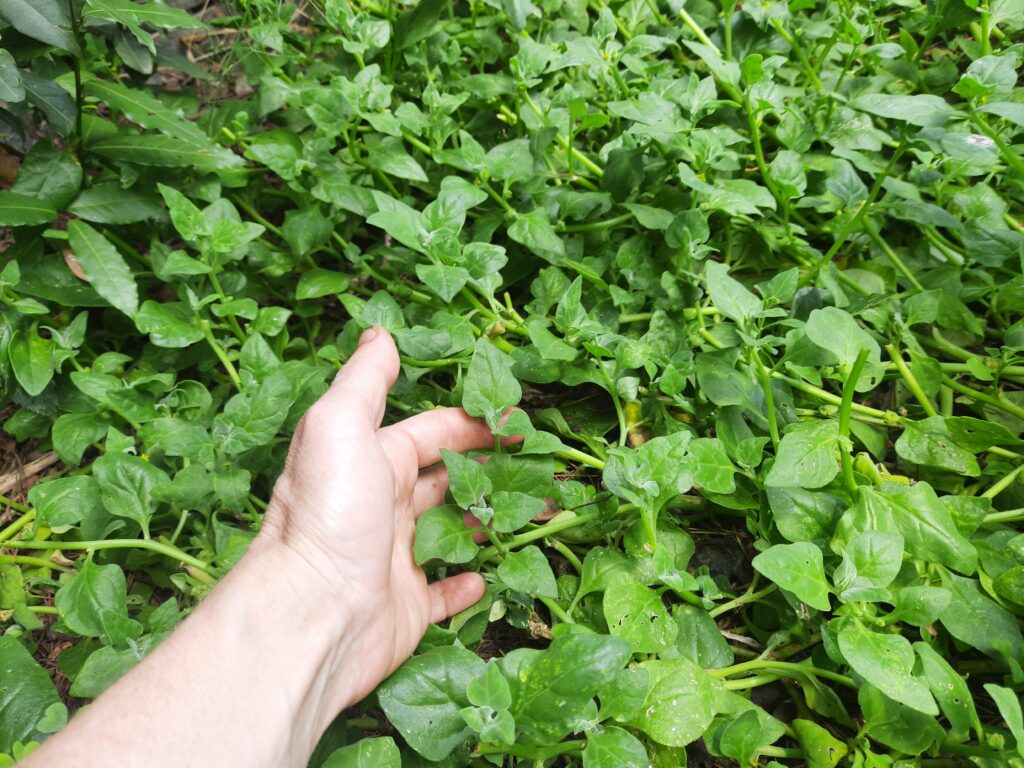
It’s sturdy and offers an abundance of leaves. I pinch the tops of the shoots and mix them in stir fries. The taste is very similar to spinach.Since it contains oxalates, it has to be cooked or blanched before eating.
Towards mid-summer it starts to produce seeds on every leaf node and eventually the seeds become very tough. But you an still collect the leafy shoots.
New Zealand spinach
MADEIRA VINE (Andredera cordifolia)
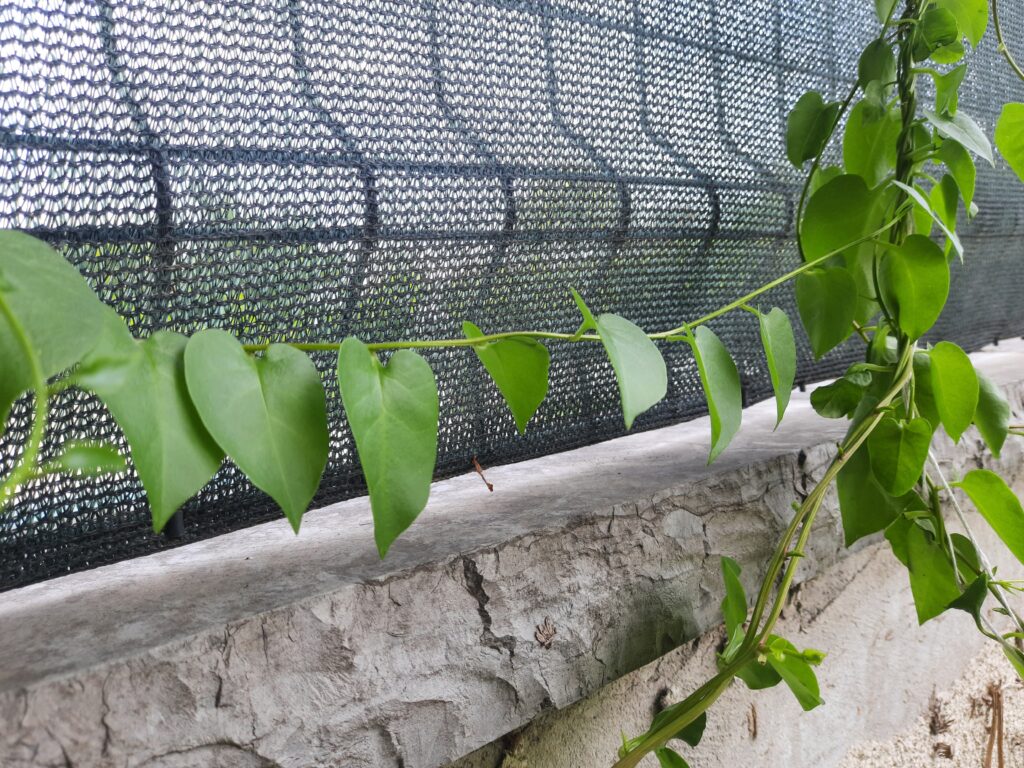
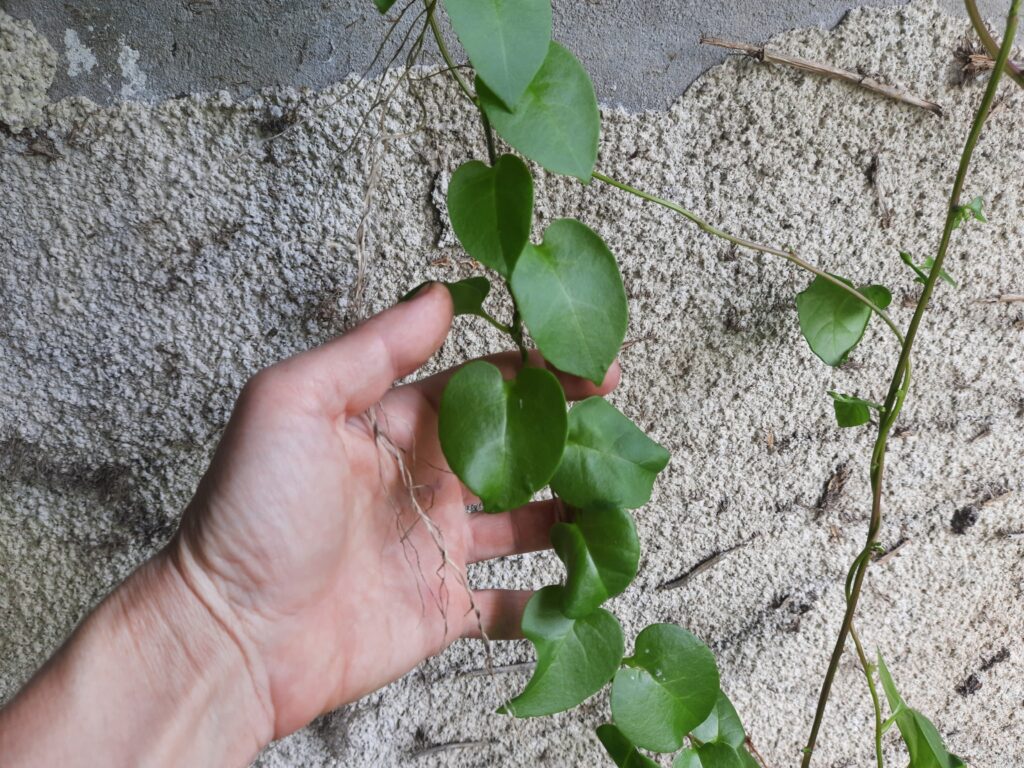
I first came across madeira vine by chance, while strolling in nearby islands. It was growing madly in an overgrown garden. From the shape of its leaves and its flowers, I realized that it was a member of Basellaceae family as it looks very similar to Malabar spinach.
Once I researched, I found out that it’s a perennial plant and its starchy roots are edible too! So I just snipped a piece off the top and took it home. It easily roots in water.
I planted it in several parts of the garden where it can climb up.The best place so far is where there is well drained soil with lots of organic matter and morning sun,afternoon shade.
The leaves have mucilage, a little bit like okra, so I cook them whole, without slicing. They cook very easily. My favorite method is stir frying in olive oil with sesame and coriander seeds .
Keep in mind that this lovely plant is considered invasive in some parts of the world. I never had an instance like that , as we regularly snip the shoots and eat them! Still we can’t get enough of it!
madeira vine
madeira vine leaves
AMARANTH
There are many many types of amaranth and as far as I know, all of them are edible! In Thailand there was the spinosus one and we ate it in our morning omelette!
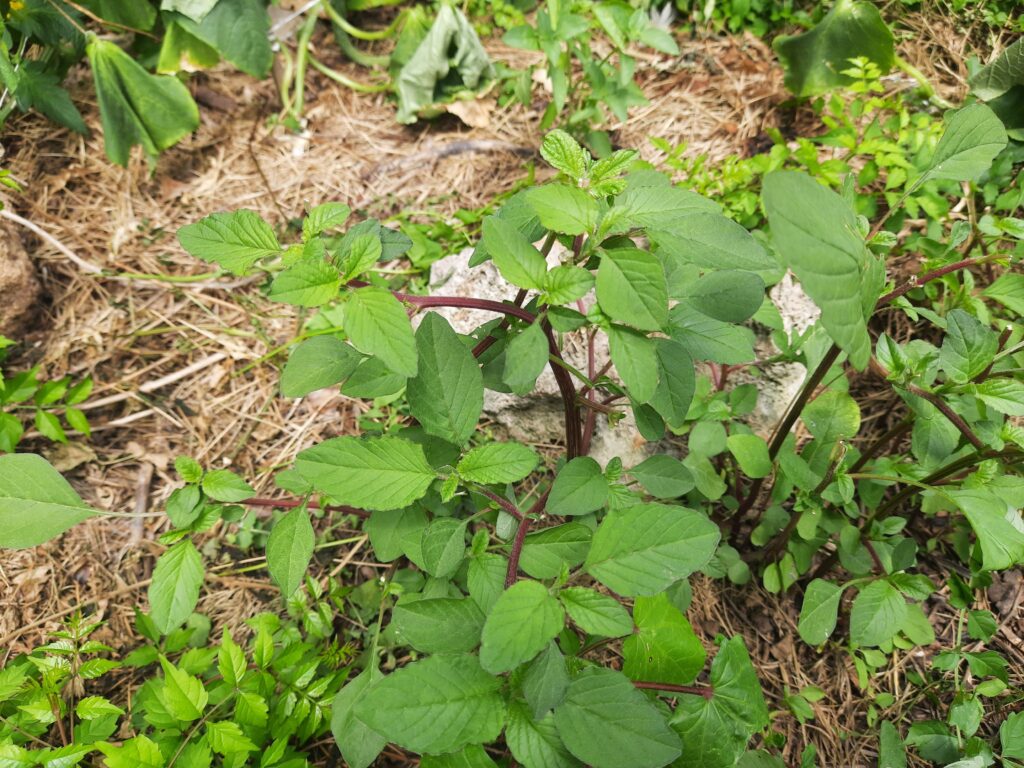
Here there’s a wild one with black seeds and red stem. It shows up when the weather really warms up and I just transplant it wherever I want.
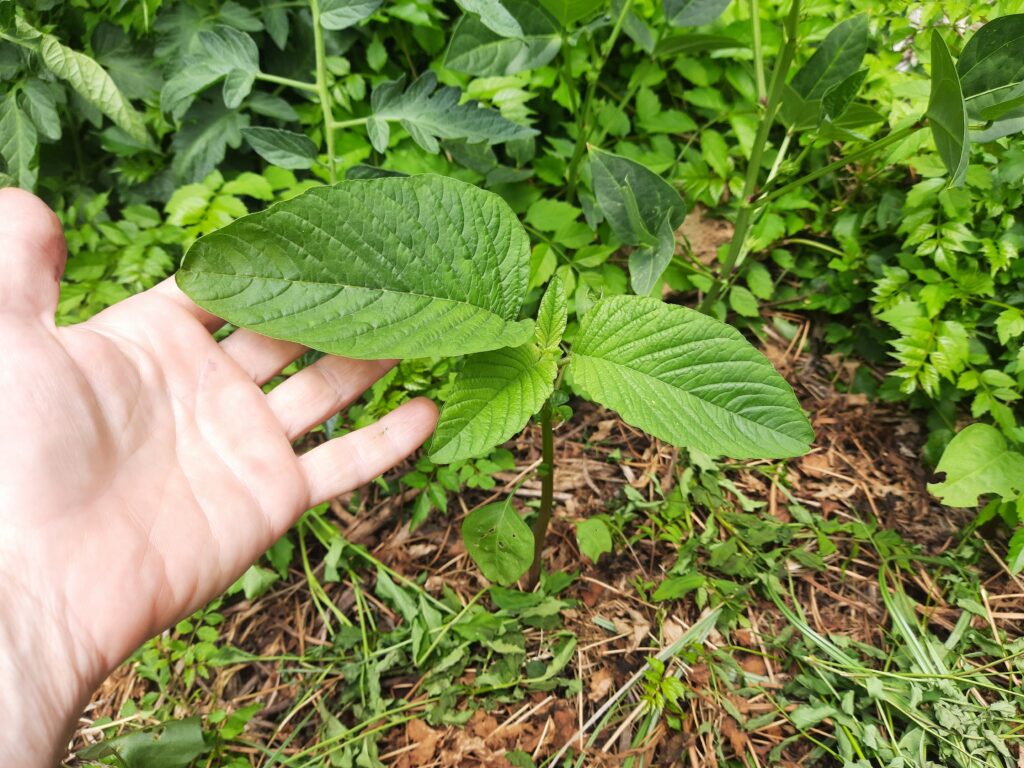
This year I planted its Carribean cousin callaloo which has very large leaves!
I keep pinching the top shoots of the wild one and it gives side shoots. They’re a good addition to stir fries and can be found almost everywhere!
wild amaranth
callaloo
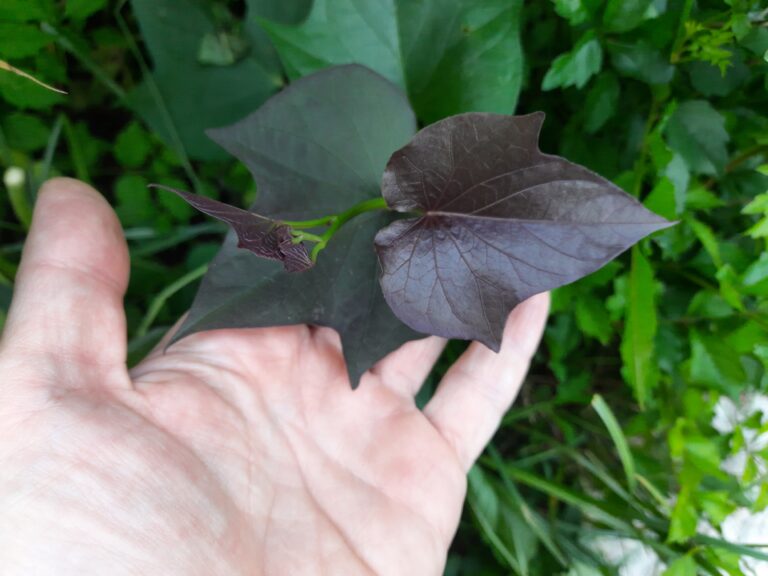
SWEET POTATO LEAVES
An easy to grow delicious summer green! Even if you don’t have the perfect soil to grow the roots, you can just grow it for its leaves! They’re abundant and taste really good.